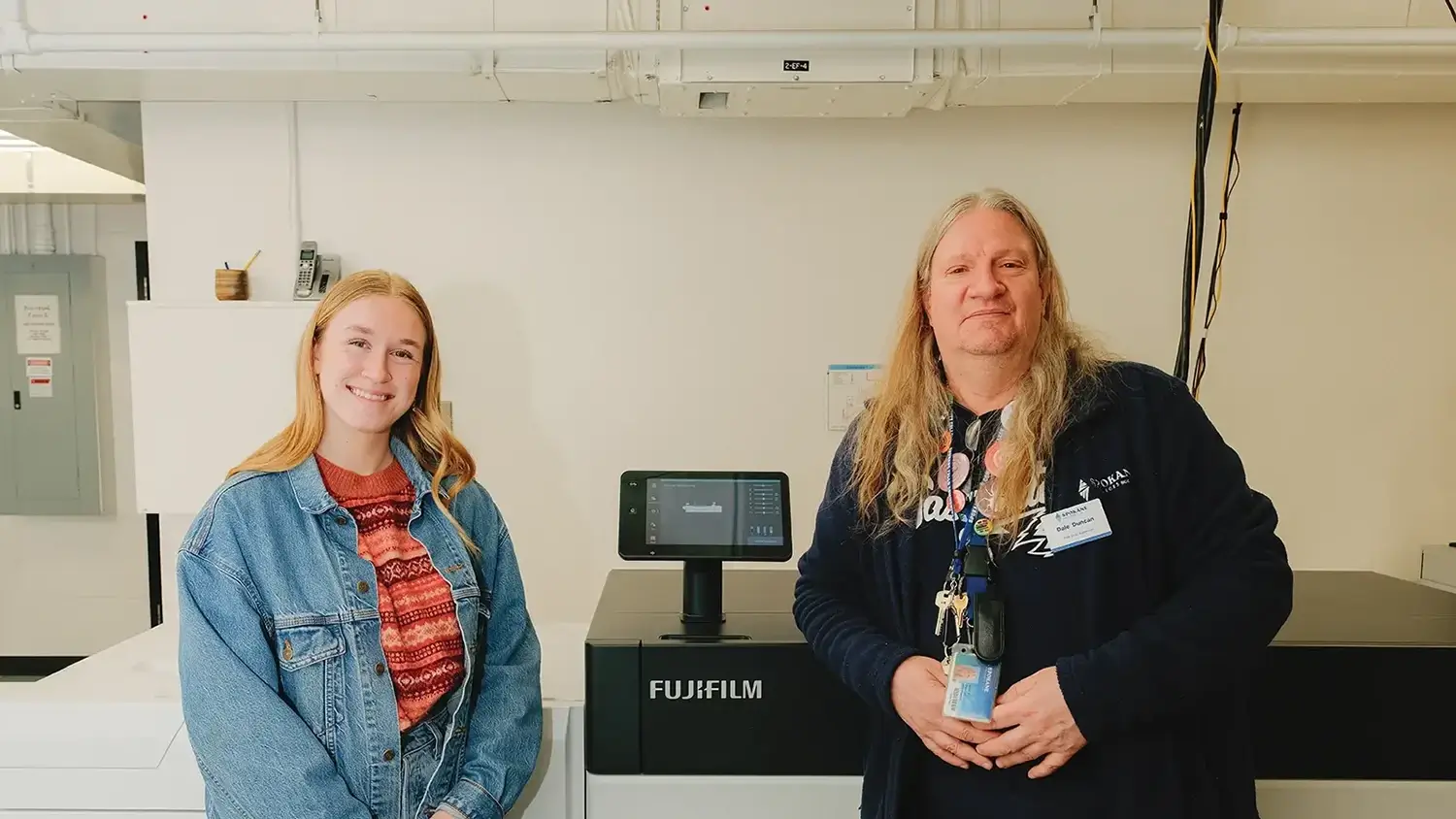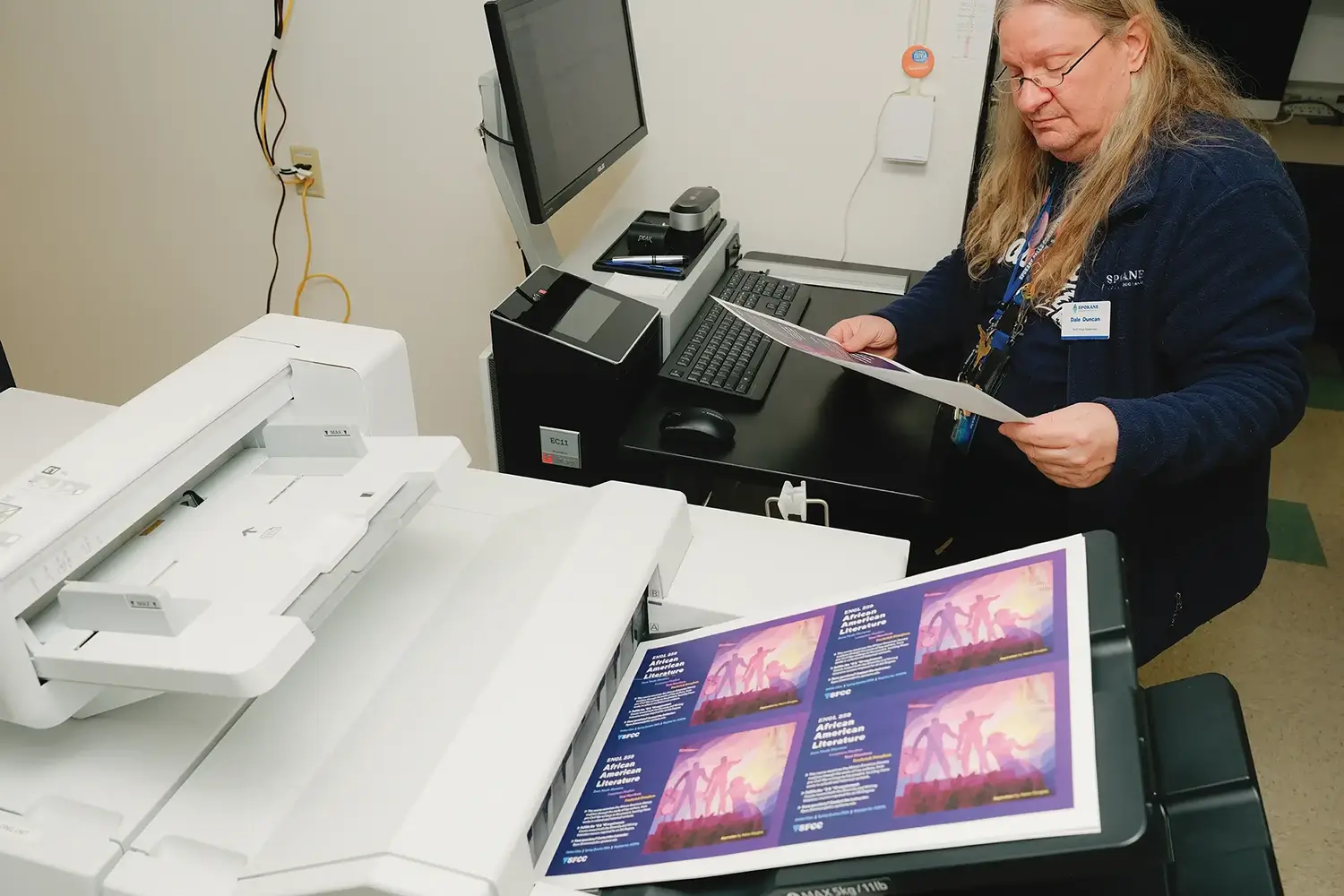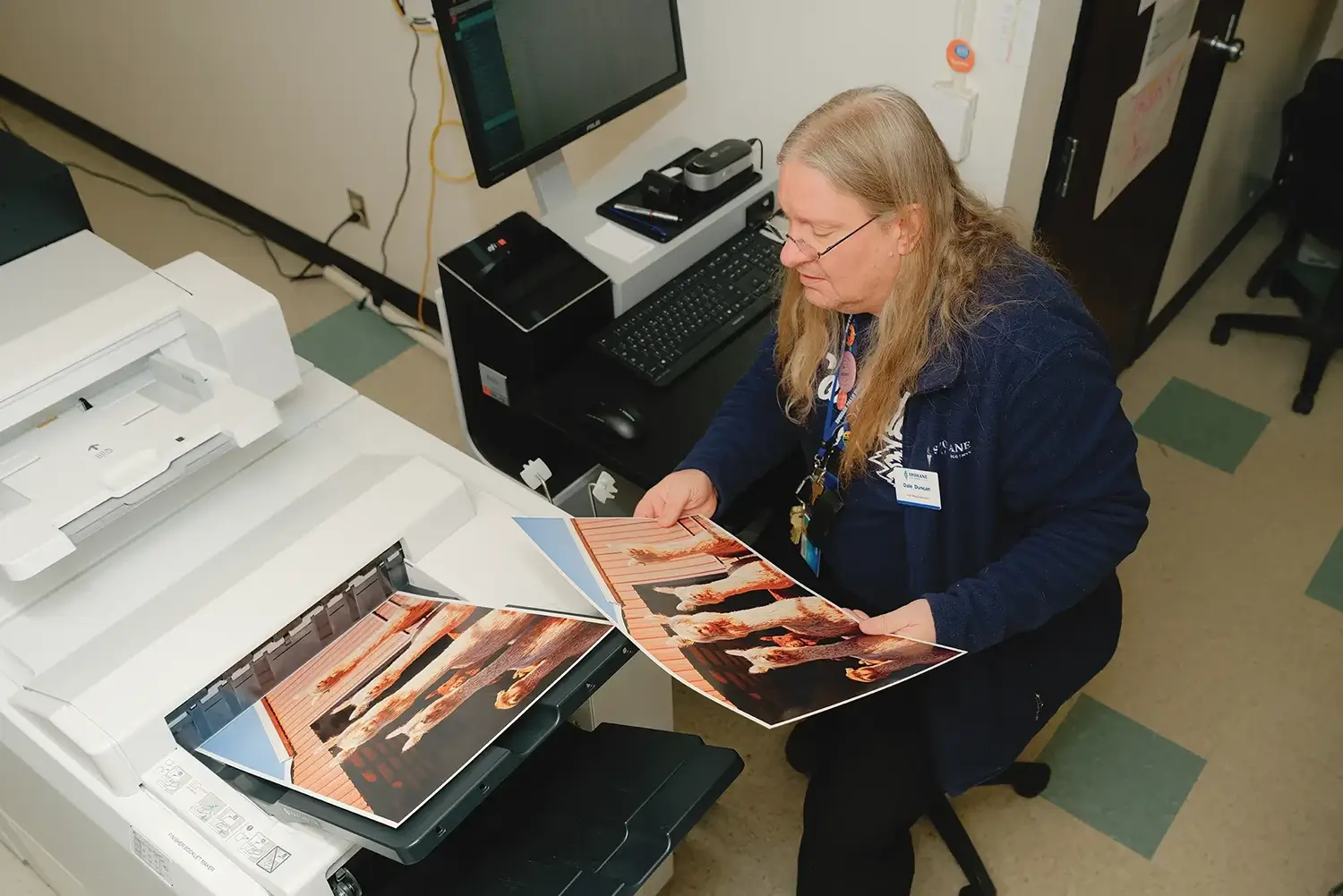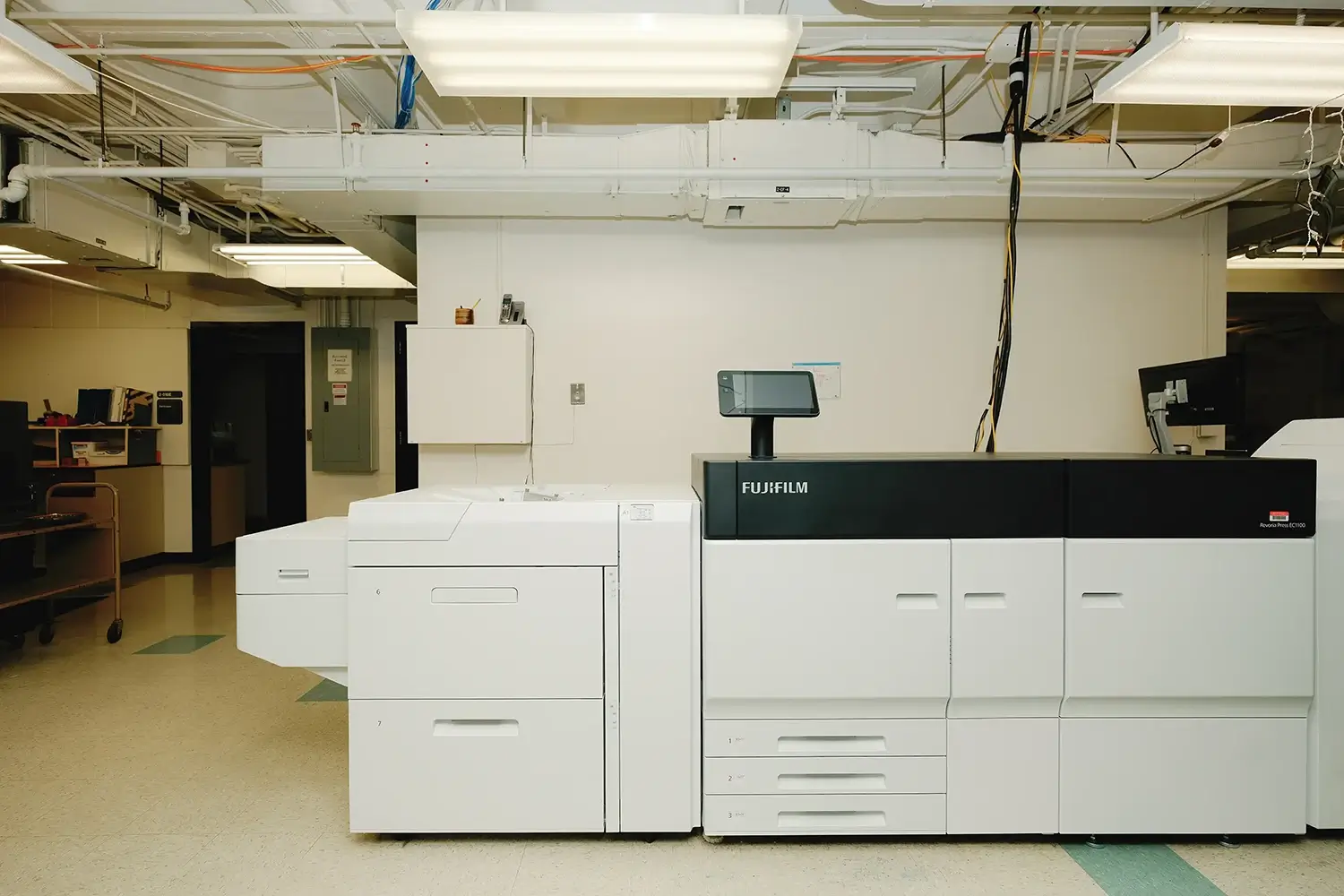

When Dale Duncan stepped into the Spokane Community College’s (SCC) in-plant print shop, he inherited a space with deep roots and a mission that mattered. While the shop’s earliest form may have grown out of the printing classes once offered on campus, its modern identity took shape in 2012 when it shed every offset press and went fully digital.
That shift signaled something bigger—a belief that print could evolve alongside the needs of the community it serves. “More recently, I updated the finishing department, replacing the aging equipment with updated devices that handle digital print better,” says Duncan, Print Shop Supervisor for Connected Learning at SCC.
The move toward a streamlined digital workflow set the stage for a new chapter: rebuilding the shop not just as a production center, but as a vital extension of SCC’s commitment to quality learning experiences. Duncan views the shop’s purpose through a different lens than a commercial printer. An in-plant doesn’t compete for market share—it reinforces the institution’s mission.
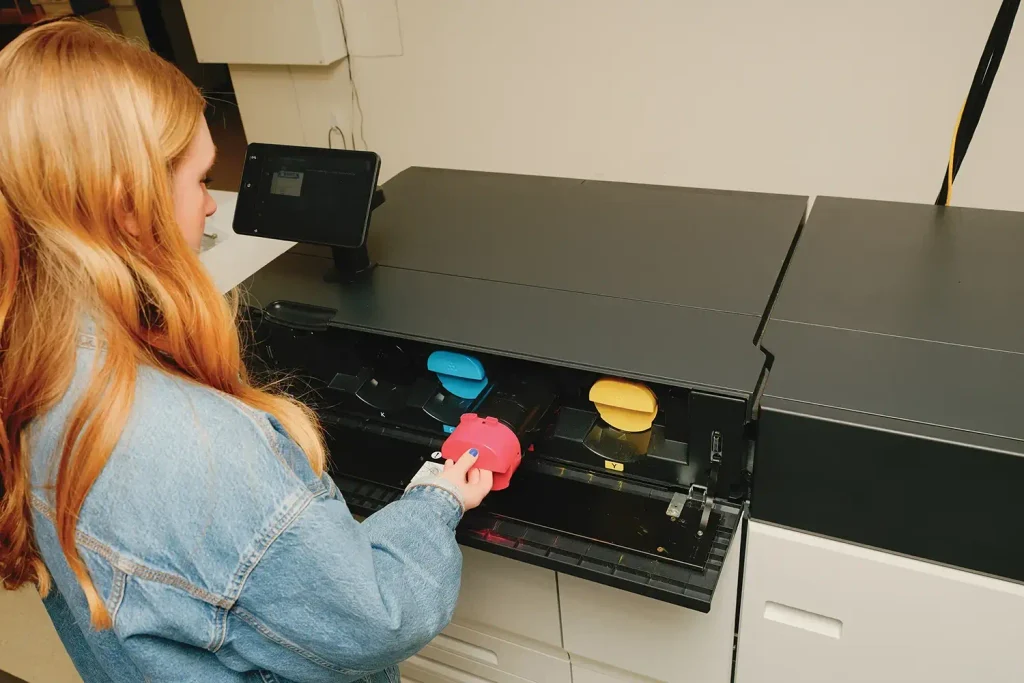
“Being an in-plant limits the ability to distinguish ourselves from the broader market, but I believe our dedication to the mission of the college ensures that what we do offer fits best with that goal,” Duncan says.
For Duncan, innovation isn’t always about the flashiest technology. Sometimes it’s about knowing what’s possible—and translating that knowledge into solutions that quietly solve big problems.
He recalls one job where students had figured out how to counterfeit gasoline vouchers. With the system broken, Duncan started thinking through how print could help fix it. His first thought was adding a covert anti-counterfeit image using clear ink on a FUJIFILM REVORIA PRESS™ EC1120 but couldn’t get it installed quickly enough, so he pivoted.
Security paper. When Duncan suggested it, the response came back with a mix of surprise and relief: “You can get that?”
“Of course I can,” Duncan said. “It comes in 8.5-by-11 sheets.”
That opened the door to more possibilities. Three vouchers per sheet. Cut them apart as needed. Or better yet—perforate them and leave a stub for tracking.
“You can do that?”
“Of course,” Duncan said.
Then came numbering. Sequential tracking. Built-in accountability.
“You can do that, too?”
“Of course,” Duncan replied.
By the end of the conversation, the vouchers were secure, trackable and impossible to counterfeit—and, just as important, easy for the end user to manage. “It wasn’t a big deal,” Duncan says. “But to them, it was better than sliced bread.”
That moment captures how Duncan approaches his role. Most of the people he works with don’t live in the world of paper stocks, finishing options or print security. To them, it feels like magic. To him, it’s simply understanding the tools and using them well. “It’s just small things like this. Most users have no knowledge of printing practices, so it seems like magic to them. It’s just another day in the Print Shop for me.”
Duncan’s mindset shows up in other upgrades. Coil binding was one of those changes—a small enhancement on paper, but a meaningful improvement in how departments present their work. “It’s silly how little things matter, but recently I added coil binding to our abilities. Innovations don’t need to be new, just new to us to be effective.”
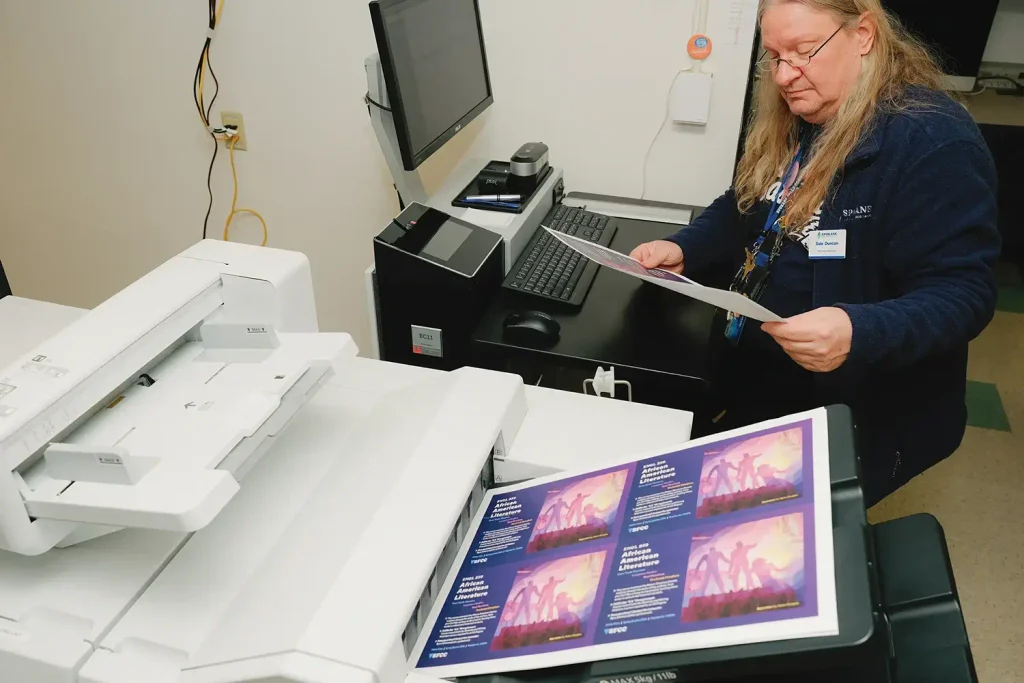
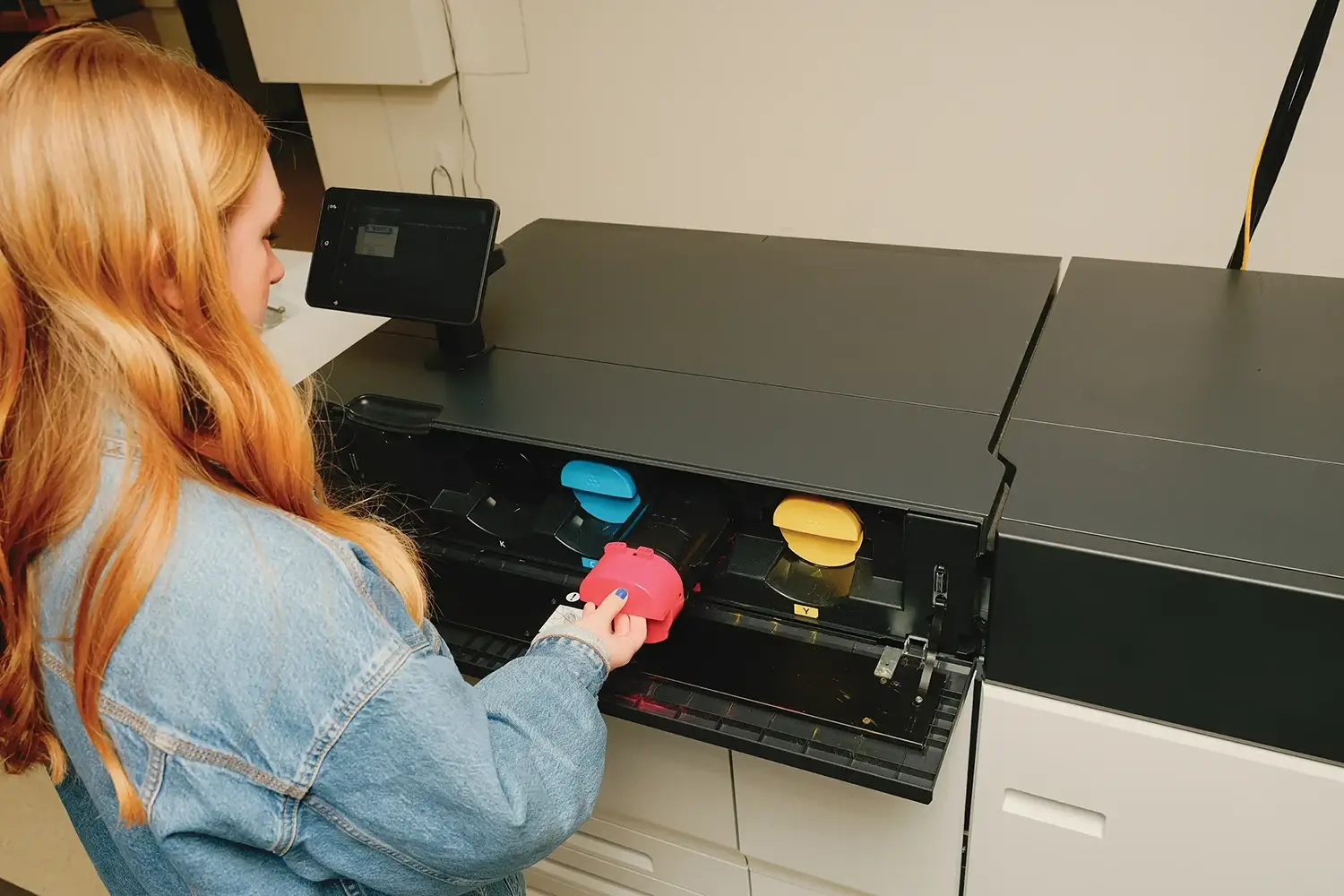
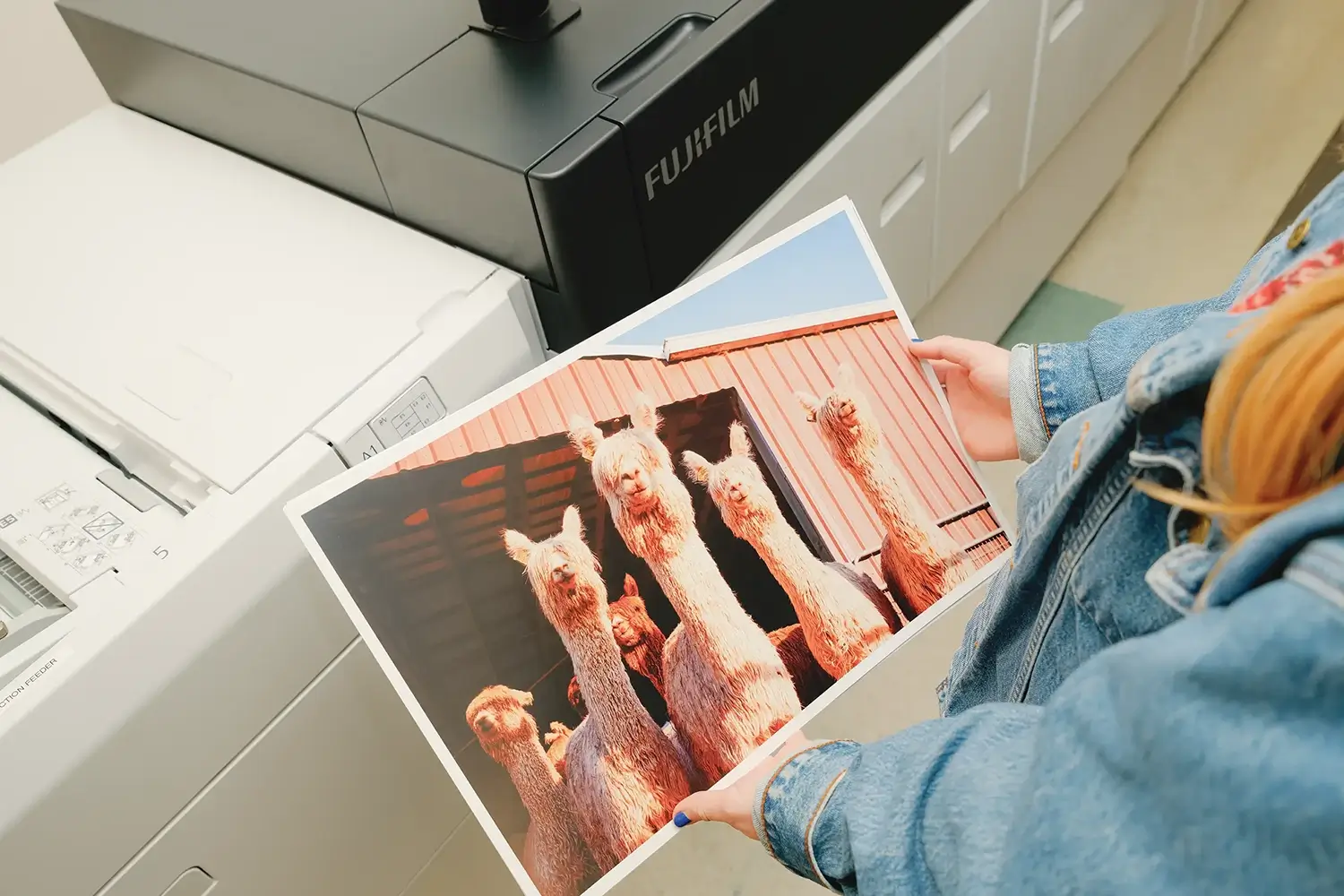
The shop’s biggest leap came with the acquisition of the FUJIFILM REVORIA PRESS™ EC1100. Duncan pursued it to raise registration accuracy, improve productivity and elevate quality—all with the goal of keeping more work in-house. The impact was immediate. “To that end, acquiring the Revoria EC1100 is a game changer. It gives us increased speed, press quality printing and registration, and more paper handling options.”
The upgrade didn’t just modernize the pressroom—it unlocked opportunities that weren’t possible before. Envelope printing became an in-house capability. Setup for tasks became faster. Fewer jobs needed outsourcing. “Because of the EC1100, I can retain more jobs and outsource fewer and do it all in less time with the higher speed and better automated setup tasks,” Duncan says.
A Standard Built on First Impressions
Duncan leads with a philosophy grounded in responsibility. The shop may print for the College, but the College is rarely the final destination. Prospective students take those materials home. Local industry leaders review them. Community partners see them as reflections of the institution’s professionalism and pride.
“We treat every job as if it’s the first impression someone will have of the college, so we make it look its best,” Duncan says.
Excellence for Duncan is not a slogan, but an everyday discipline. Faster turnarounds with less cost. Smarter processes that keep the shop efficient. Clear standards that align with the College’s reputation. “Like every print shop, we need to turn around with less cost. An in-plant is no different.”
The pace of change in print doesn’t intimidate Duncan—it motivates him. His approach is measured and forward-looking: Invest in equipment that will remain useful for years while leaving room for what’s next. “To future proof the shop, I’ve been acquiring equipment that I know will still be useful years down the road.”
This long view is strengthened through collaboration with trusted partners like FUJIFILM, which continue to provide insight into emerging technologies and help evaluate which advancements make sense for the shop’s mission. “There is always something new coming down, so I rely on my FUJIFILM partners to keep me informed so we can decide if it’s something we might be able to utilize,” Duncan says.
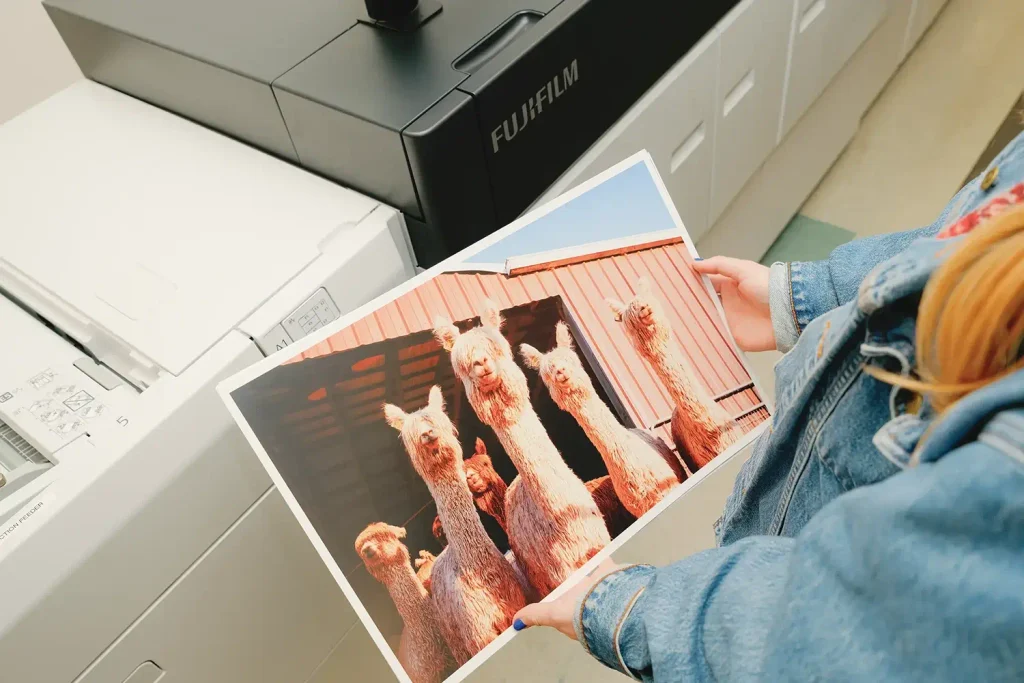
Every six months, on average, he adds or improves a process—small steps that collectively keep the shop relevant in a rapidly shifting landscape. “I plan to try and continue that trend so the shop can stay relevant in the face of change.”
Duncan is not one to dwell on individual wins. Instead, he points to steady signals of trust, which includes rising volume and consistent feedback from across campus. “I get a lot of compliments on the job the Print Shop has been doing, so I know we are making a difference. Plus, our volume is up so that speaks to the confidence users have to place their jobs through our shop.”
In a landscape where print operations often fight for relevance, Spokane Community College’s Print Shop is proving that an in-plant can be both efficient and essential—a place where small details solve real problems, quality builds confidence and print quietly supports the mission it serves every day.