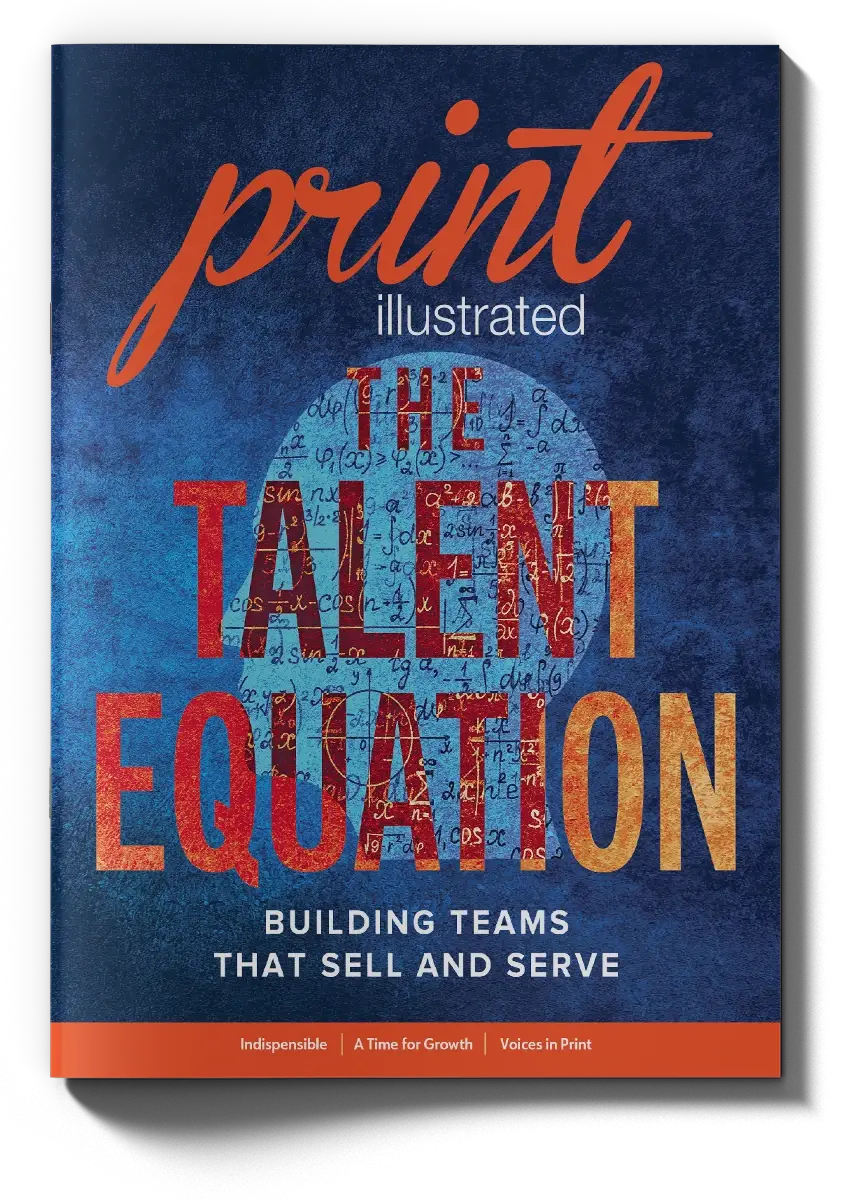
Kevin Wilcox understands the challenge of finding the next generation of workers in the print industry. Like many leaders, he is navigating a workforce landscape where experienced employees are retiring, fewer young professionals are entering the field and the traditional pipeline of talent continues to narrow.
As he tackles today’s workforce challenges, the founder and president of Arkansas Graphics has discovered that the hardest skills to find are not always technical. While equipment, workflows and production processes can be taught, qualities such as ownership, curiosity and composure under pressure are much harder to develop.
For Wilcox, this new reality is reshaping how he thinks about hiring. Where companies once sought the next experienced print operator, they now seek traits that determine how someone responds when a customer calls with a problem, a job goes sideways or a deadline suddenly becomes urgent.
“We have to start hiring for aptitude and temperament as we move forward and not just because they can run a piece of machinery, which is becoming more rare anyway,” Wilcox says. “We have to recruit from outside of the industry, which has its own challenges. Today, the ‘in the industry’ pipeline is quickly drying up. I try to be honest during interviews highlighting all the things that can go wrong during the day as much as how good a day can be.”
“I have learned how much there is to gain by looking outside of our walls and outside of our industry for knowledge. Asking other successful people questions and reading books suggested by them has opened my eyes.”
– Justin Merrick, VP, The Merrick Printing Company
As print providers evolve from production partners to business advisors, the next generation of employees must be able to create value for both the company and its customers. Founded more than 40 years ago, the Little Rock-based company has built its reputation by blending the craftsmanship of a traditional commercial printer with a forward-looking approach to technology and customer communication.
Today, Arkansas Graphics delivers solutions spanning offset and digital printing, variable data applications and web-based communications, helping clients connect with audiences across both print and digital channels. “We have diversified from general print to mail services, promotional items and display graphics. The employees who can move between these worlds and are willing to do it are the most valuable. These skills are less about knowing one machine and more about breadth of knowledge and ability to communicate that knowledge. Adaptability and initiative are now two of the most important skills out there.”
If the new hiring mantra starts anywhere, it begins with fostering a culture of accountability and continuous learning. “I think this shift happens when our employee understands the customer is looking for more than just a brochure,” Wilcox says. “They are looking for increased sales, brand support, more leads and general support in helping grow their business.”
For Wilcox, creating that environment starts with leadership and extends throughout the organization. “I think company culture plays a huge role in retaining talent. I try to make sure our employees feel they are treated fairly, utilized well and compensated fairly. They are the most important thing about the company, and it’s sometimes hard to communicate that.”

The Culture Advantage
For Justin Merrick, VP of The Merrick Printing Company, finding the right talent means looking past the resume and focusing on potential. The Louisville, Kentucky-based print provider has discovered that some of its most successful hires are not industry veterans, but individuals with a strong aptitude for learning and a willingness to see challenges through a different lens.
“While print is not the easiest world to learn, focusing on finding quick-learning, high-potential talent has paid off,” Merrick says. “They take less time to train on your processes because of their ability to learn and bring a different perspective to a mature industry.”
Merrick calls it the “Shooting Star Theory.” The idea centers on identifying unique abilities in people rather than simply matching resumes to job descriptions. It’s a philosophy that recognizes how rapidly technology, customer expectations and business models continue to evolve.
Finding the right people is only part of the equation. Keeping them requires culture. “We harvest a culture of not being afraid to say, ‘I don’t know’ and being comfortable going to others for answers,” Merrick says. “We built a culture that is not toxic very intentionally, so people are not afraid to ask for help.”
“Start small, but start. Make sure you are clear on the package communication that there is call to action to engage with these solutions.”
– Kevin Wilcox, Founder/President, Arkansas Graphics
Merrick says the benefits extend far beyond company morale. “When people are comfortable not having to know everything all the time, they respond to customers more politely and effectively. Being prompt, but taking the necessary time to get accurate, better answers goes a long way.”
The mindset has become increasingly important as print operations grow more technology-driven. From automated workflows and data-driven sales strategies to smarter presses and connected production environments, today’s employees must navigate constant change. “Keeping up with technology is a big item,” Merrick says. “It’s affecting everything from sales to production to shipping.”
And while today’s print generation must keep up with new technologies, outside of the technological expertise, being resourceful is a great tool to have. “I have learned how much there is to gain by looking outside of our walls and outside of our industry for knowledge,” Merrick says. “Asking other successful people questions and reading books suggested by them has opened my eyes.”
In a business built on deadlines, relationships and problem-solving, the talent equation is changing. Print’s next chapter will not be written solely by faster presses or smarter workflows, but by people willing to learn, adapt and take ownership when the moment demands it.
5 Traits Defining Print’s Next Generation
- Hire for Potential – Prioritize aptitude, curiosity and attitude over industry experience alone.
- Encourage Questions – Employees learn faster and serve customers better when they are comfortable asking for help.
- Think Beyond the Job – Help employees understand customer goals, not just production requirements.
- Commit to Learning – Technology evolves quickly. Continuous development is essential.
- Build Culture on Purpose – People stay where they feel valued, supported and challenged to grow.
Source: Kevin Wilcox, Arkansas Graphics; Justin Merrick, The Merrick Printing Company