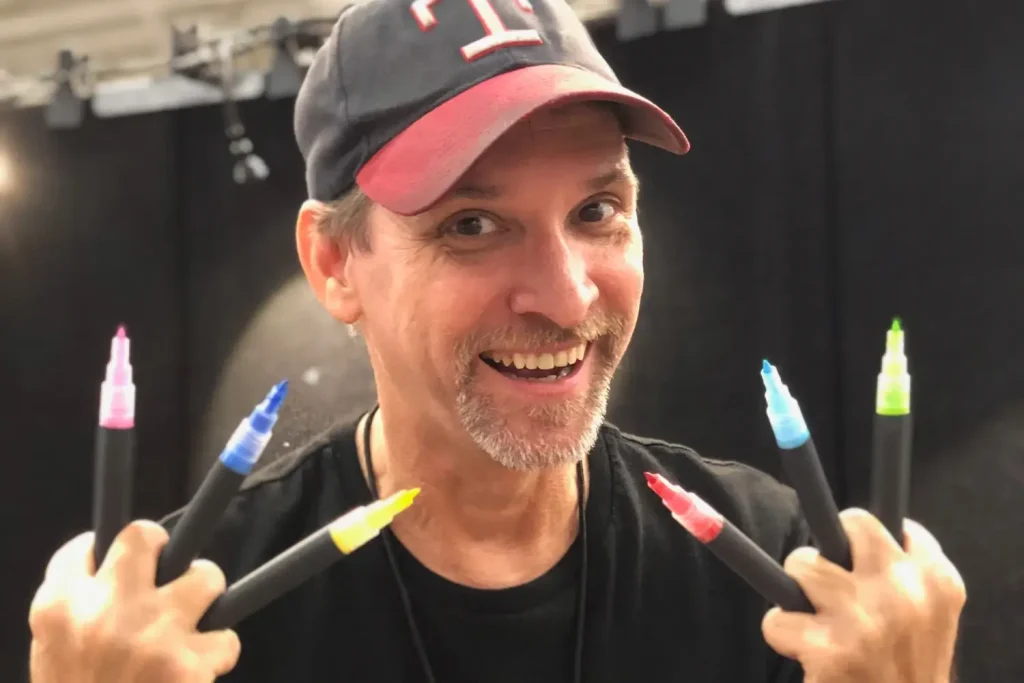
Greg Horn is one of the most influential comic book cover artists of the modern era. Best known for his work with Marvel and DC, he helped usher in the digital painting movement that reshaped the industry. Since debuting at Marvel in 2000, his striking covers for titles like “Elektra,” “Emma Frost,” “She-Hulk,” and “Ms. Marvel” have earned both fan acclaim and industry awards. Beyond comics, his artwork has appeared in global ad campaigns, video game magazines, and two published art books. Today, Greg continues to captivate collectors with exclusive variant covers, celebrity collaborations, and a thriving online store, all while staying deeply connected to fans through live auctions and convention appearances.
After attending Printing United, what gets you most excited about print right now?
The thing that gets me most excited about print is being able to get as many colors as possible. That’s always been the grail for an artist like me. Since I started painting digitally, you’re often way out of gamut if you’re not careful. Then you see the printed result and think, “This isn’t quite what I wanted.” So when I hear about printers with extra colors, I perk up.
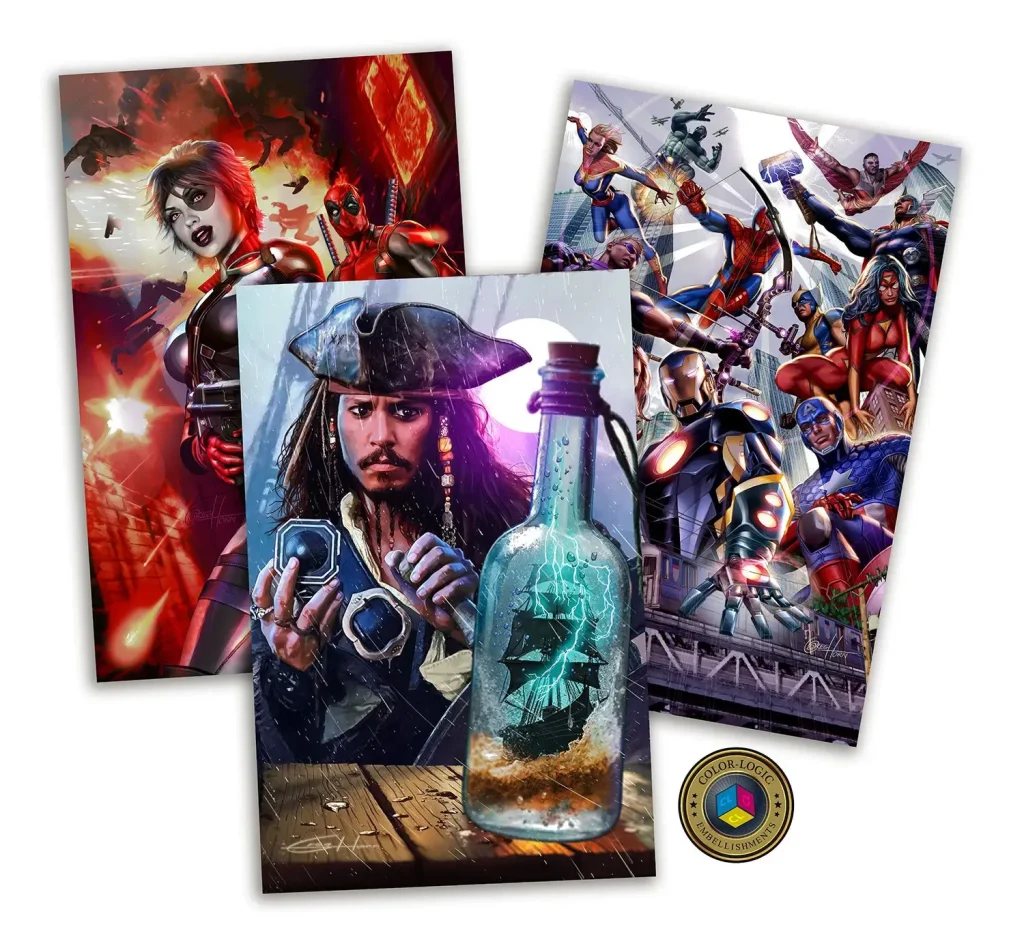
I noticed something with uni-foil prints: When the foil comes through the color and you hit it in the right light, it almost glows. I realized that if I design specifically for the foil—especially for colors I know won’t normally print—I can “cheat” it in a really cool way.
Does print give you more room to use your imagination than digital?
For sure. Especially with large-format printing, you can incorporate more detail into the artwork. And with foils, I’m looking at color in a completely new way.
One example is a painting I did of Johnny Depp from “Sleepy Hollow.” The background is blue, and they added foil effect to that blue. The way it hits the light is otherworldly. Honestly, I think it looks better than what I see on my computer screen.
“Comic books are a perfect example. Having that book in your hand, flipping through the pages, smelling the ink—it’s a full sensory experience.”
Has the digital world—and AI in particular—changed how you create?
It has. I definitely put a governor on myself when I paint. For the past 20 years, I’ve used a specialized group of swatches that I know will print. Early in my career, when I’d just started at Marvel, I’d do these paintings and see that the medium blue printed great, but the light and dark blues didn’t.
I started investigating and found what a lot of colorists do: They’ll use a purplish blue for the darks and a greenish blue for the lights because the printer can hit those colors. I really keyed into that. So yes, I limit my colors when I’m painting, even though digital gives you this illusion of limitless options.
On top of that, AI creates another challenge. I look at the current state of the art industry and see a lot of headwinds for young artists. I find myself getting jaded when I see things online—art, videos, whatever—and wonder, “Is this even real?”
I saw a video of a cat jumping onto a fan and swinging around by its paws, and my first reaction was, “That’s not real.” I completely lost interest. What happens when half of what’s online isn’t true, and the other half you’re not sure about? That’s one of the reasons I’m trying to build more personal relationships. I really think AI is going to ruin the internet.
You’ve talked about the importance of “what’s real.” What does print give you that digital never will?
Print is something you can touch. You can hold it in your hands, hang it on a wall—it’s always there.
At Printing United, I saw incredible prints with tactile effects—raised textures and varnishes that glossed in the light. You could feel them as much as see them. You don’t get that digitally.
Comic books are a perfect example. Having that book in your hand, flipping through the pages, smelling the ink—it’s a full sensory experience. The prints I brought home from the show made my whole car smell like them. To me, that smelled like the nectar of goodness.
How did you get started as an artist, and how did that lead you to Marvel?
My mother taught me art at a young age—she was an artist herself. I saw comic books when I was eight or nine and knew that’s what I wanted to do.
I eventually found my way into independent comics, working for a local company in Florida called AC Comics. I toiled in indie books for about 11 years. I’m actually grateful for that time—it forced me to hone my skills because I couldn’t break into the “big time” right away.
By the time I got to Marvel, I had an art style no one had seen before. I’m the first digital cover artist in comics—or at least the first doing the style people are doing now. You could say I was a trailblazer.
“I realized that if I design specifically for the foil—especially for colors I know won’t normally print—I can ‘cheat’ it in a really cool way.”
If you were advising marketers, how should they think about print?
This is a world of competition. You want to stand out. My advice would be: Splurge a little. Spend the extra money on the bells and whistles and make your product stand out. There’s so much visual eye candy out there—you’ve got to rise above it.
Print’s big advantage over digital is collectability. That was even obvious at the show. There were limited quantities of prints at various booths, and people started chasing them like crazy. That’s powerful.