It grew out of one of those “what-if” conversations. A gifted home-brew kit. An old garment factory just off the square in Lawrenceville, Georgia. Before long, founders John Reynolds and Marty Mazzawi opened the doors to Slow Pour Brewing Company in 2017. The space—driven by its inviting tasting room and laid-back beer garden—eventually transformed into a warm, welcoming place where people could slow down, talk, listen to music and enjoy a beer.
Working every day to drive the craft beer’s branding efforts, Kyle King has watched the brewery’s motto, “The Moment Matters,” go from a tagline to an experience. One of the keys is Slow Pour’s packaging, which King, who heads digital media and marketing, says continues to be one of the most powerful ways to extend that experience beyond the taproom.
“Start small, but start. Make sure you are clear on the package communication that there is call to action to engage with these solutions.”
– Josh Dearwater, Manager, Corporate Graphics, American Packaging Corp.
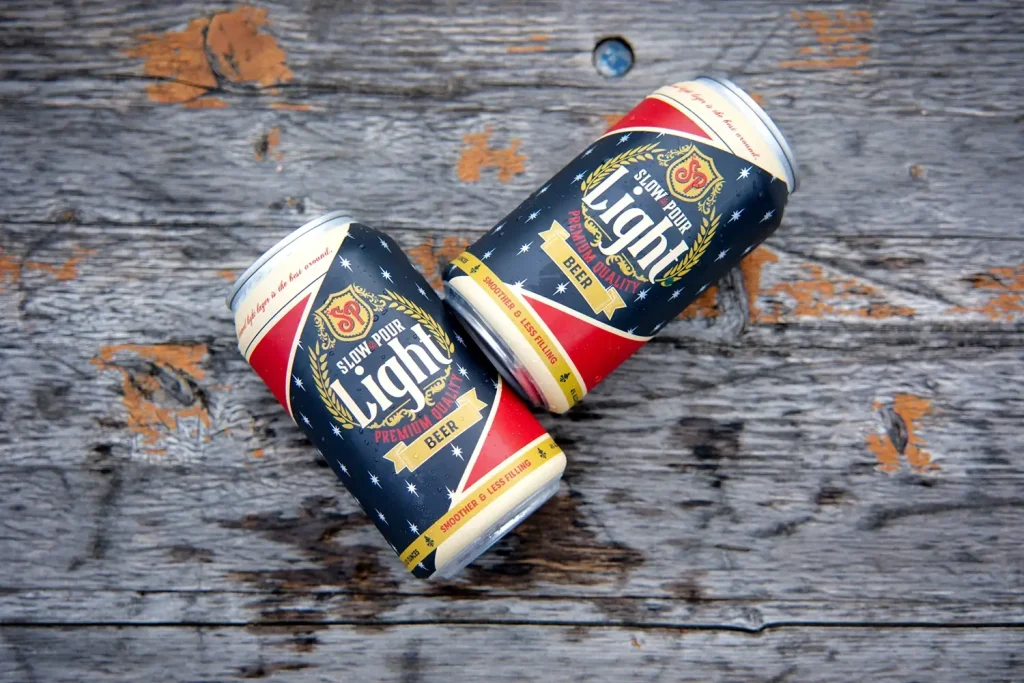
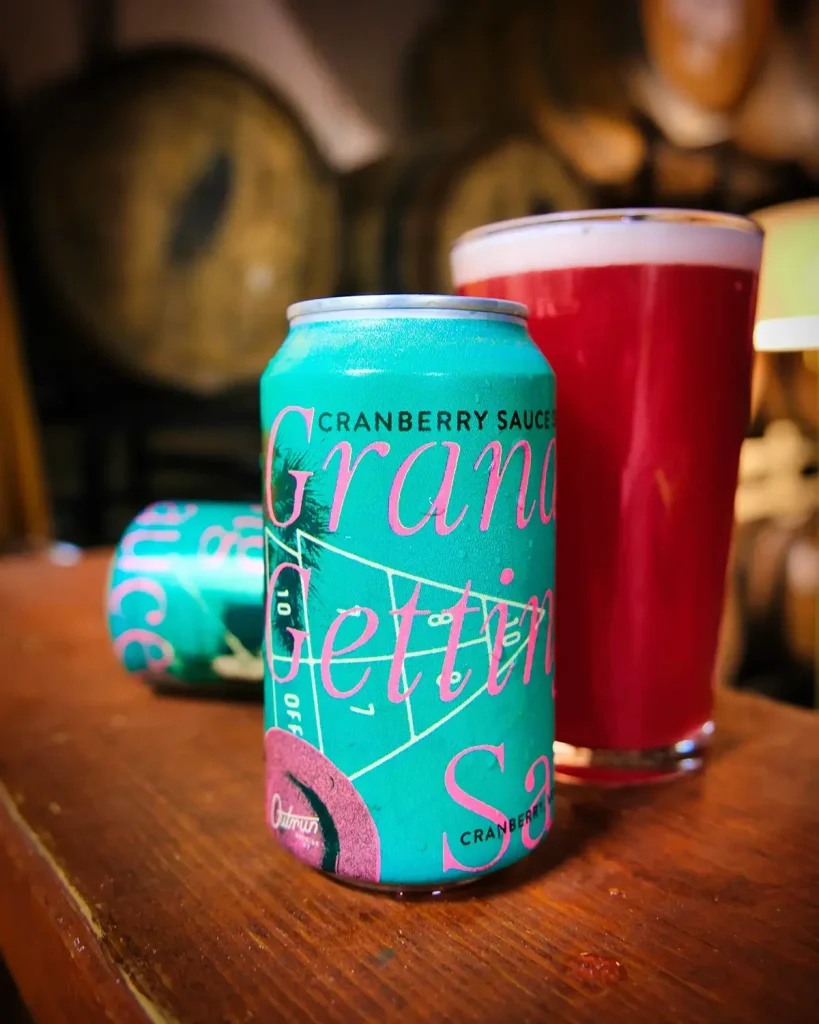
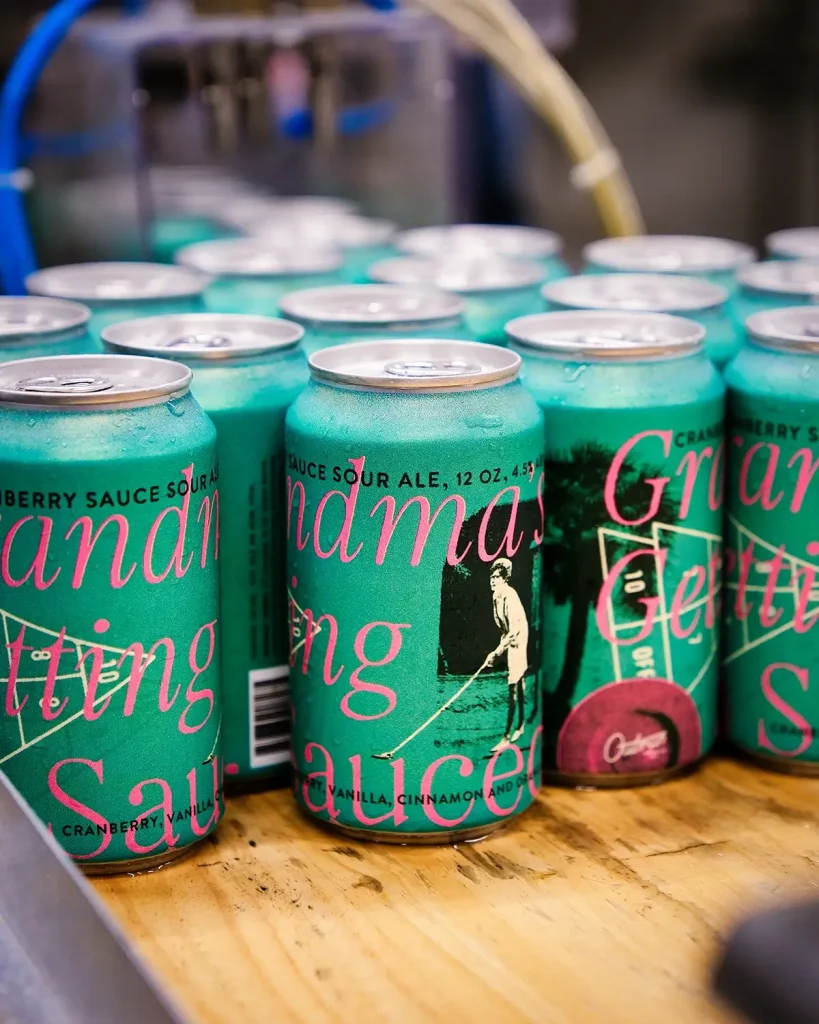
King says everything on the can must feel true to the brand—not just an abstract design principle, but a real influence on perception and loyalty. Slow Pour’s aesthetic leans into rustic, classic and rooted visual cues. Some cans are illustrated by traditional tattoo artists. Others echo the vintage simplicity of ’70s and ’80s beer culture. The art reinforces the personality of the taproom, which reinforces the beer, which reinforces the story.
“The intentionality of the art, quality of the print, wraparound sleeve versus direct-on-can, even the feel or texture of the ink, can make a difference in how people feel when they’re drinking your beer,” King says. “A well-designed can with a quality label can make the sale from across the room if it’s displayed well.”
As a mid-size brewery, Slow Pour relies on six-packs in the taproom and in retail. Direct-on-can printing gives the team the consistency and durability they want, while supporting creative freedom.
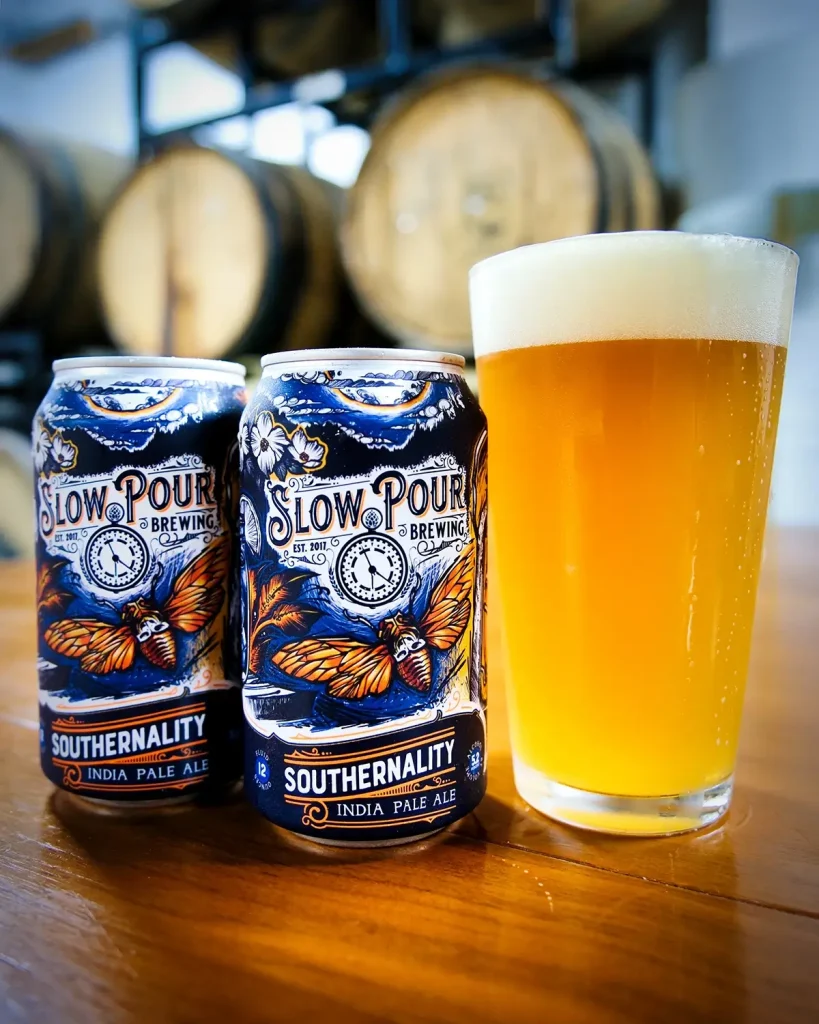
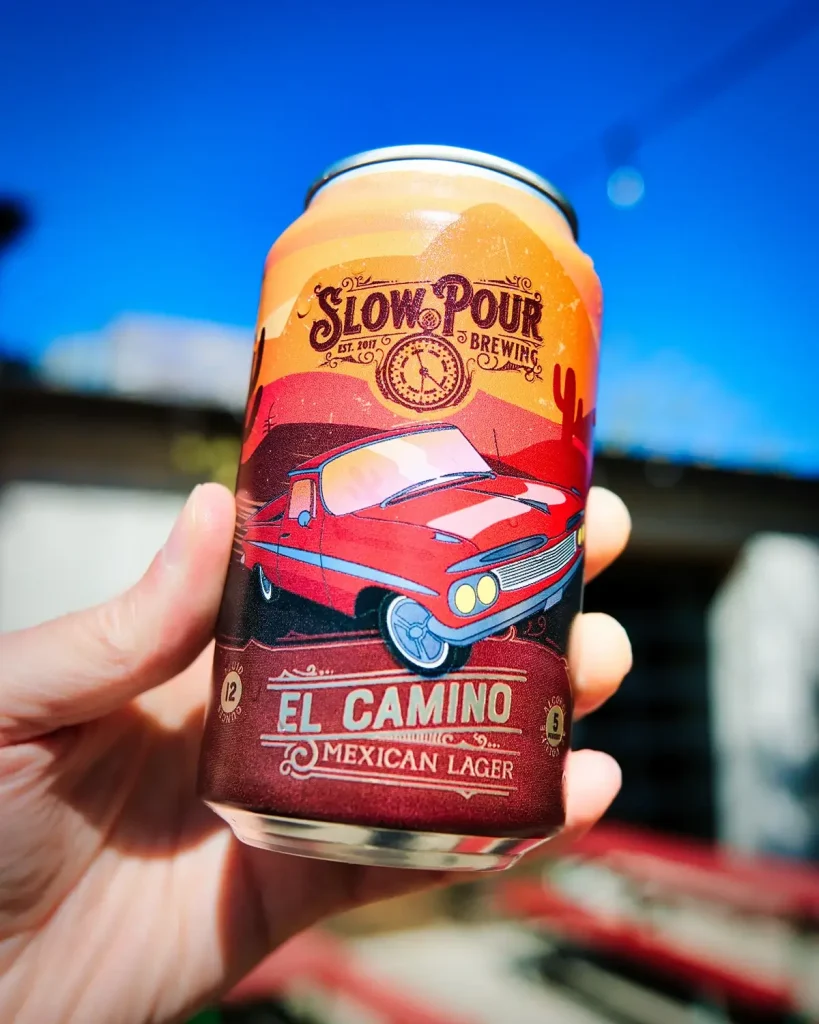
Take its El Camino Mexican Lager. The design included transparent sections so the aluminum could shine through on the chrome of a classic car. That detail mattered visually and thematically. It just required working closely with the printer. “We left a transparency layer in the photoshop file for the chrome finish on a car so that the aluminum could shine through,” King says.
Packaging also drives engagement. Some releases attract loyal collectors, not because of rarity but because the art becomes part of the experience. Every time a new can drops, Slow Pour can predict how the campaign will move on social based on the design’s boldness, clarity, and emotional tone. “A bold, eye-catching can will make the social campaign a lot easier to market,” King says.
Sustainability plays a role as well. Slow Pour focuses most of its sustainability efforts on brewing practices, but the packaging supports it in straightforward ways. King points to their recyclable snap-on carrier tops for six-packs. They offer a better grip, a more secure fit and a lower environmental impact than plastic rings. “The snap-on tops make for easier carrying, ensure a more dedicated snug fit for the can and are recyclable,” King says.
Smart Packaging as Engagement Engine
For Michael Agness, smart packaging is not a futuristic idea—it’s a natural extension of what brands have always done. Agness, EVP Americas for Hybrid Software, remembers the collectible cards in cereal boxes and the weekly rotating cups in fast-food restaurants. Those experiences created anticipation and loyalty.
Today, mobile technology allows every brand, including craft breweries, to recreate that sense of connection in a digital way. For craft brands, the simplest gateway is a QR code, which leads to a short video or flavor story. While the barrier to entry is low, the impact can be high. “A unique QR code that tells the story of the small batch that leads to a simple video on the tasting and selection process is a great starting point,” Agness says.
Once customers begin scanning, brands gain insight into where products move, how often fans engage and where emerging pockets of demand may exist. Those patterns help teams focus their marketing resources more strategically. “Small pieces of information will lead to more knowledge about the story of the sale, and you can drive down greater detail,” Agness says.
In today’s eco-friendly landscape, sustainability remains a priority. Agness says that smart packaging does not have to compromise it. QR codes, educational links and digital experiences use no extra material. In fact, they can strengthen sustainability messaging by showing customers how to recycle effectively.
“A QR code to a video on the proper way to recycle the can is just as sustainable as any other package,” Agness says. “Print and packaging partners must help brands understand whether their designs translate cleanly to digital production. Color choices, substrates and finishing methods all influence flexibility.”
Practical Pathways to Smart Design
Josh Dearwater, who manages corporate graphics for American Packaging Corp, views smart packaging through a practical lens. He believes that while packaging is a gateway, brands must supply the experience. For example, begin with data-rich codes like FlowCode, GS1’s upgraded 2D codes or Digimarc. These tools create direct paths to online content the brand controls. “Data rich codes that can link to reference elements the brewer can own and maintain.”
Dearwater recommends craft brands build slowly and intentionally. Begin with a single link to a flavor description or a short message from the brewer. Let the data accumulate. Let the experience grow organically. “Start small, but start. Make sure you are clear on the package communication that there is call to action to engage with these solutions.”
“Print and packaging partners must help brands understand whether their designs translate cleanly to digital production.”
– Michael Agness, Executive VP, Americas, Hybrid Software
On the sustainability side, Dearwater says brands must be grounded in truth. Each claim must be accurate, consistent and verifiable. “Ask the question, is sustainable package core to the brand or just a complement?”
Dearwater says it is important for today’s printers to remember that while they play a central role in feasibility checks, consistency and execution, they cannot control retail impact. The value lies in technical clarity. “Use them for feasibility—can this be done, and use them to help create consistency—will it all look the same on shelf.”
As packaging evolves from container to communication channel, it gives brands new ways to tell stories that live well beyond the shelf. For craft producers embracing both design and digital tools, each beer can becomes a moment of connection that builds loyalty sip after sip.
5 Smart Packaging Moves for Today’s Craft Brands
- Start with a Simple Scan – Use a QR code that links to a flavor story or quick video.
- Tell the Batch Story – A short tasting clip or brewer message adds instant depth.
- Let Data Lead – Scans show where cans go and where demand grows.
- Make the Call to Action Clear – Tell customers exactly what to scan and why.
- Connect Sustainability to Use – Show how to recycle or dispose properly through a quick link.
Source: Kyle King, Slow Pour Brewing; Michael Agness, Hybrid Software; Josh Dearwater, Manager, American Packaging Corp.