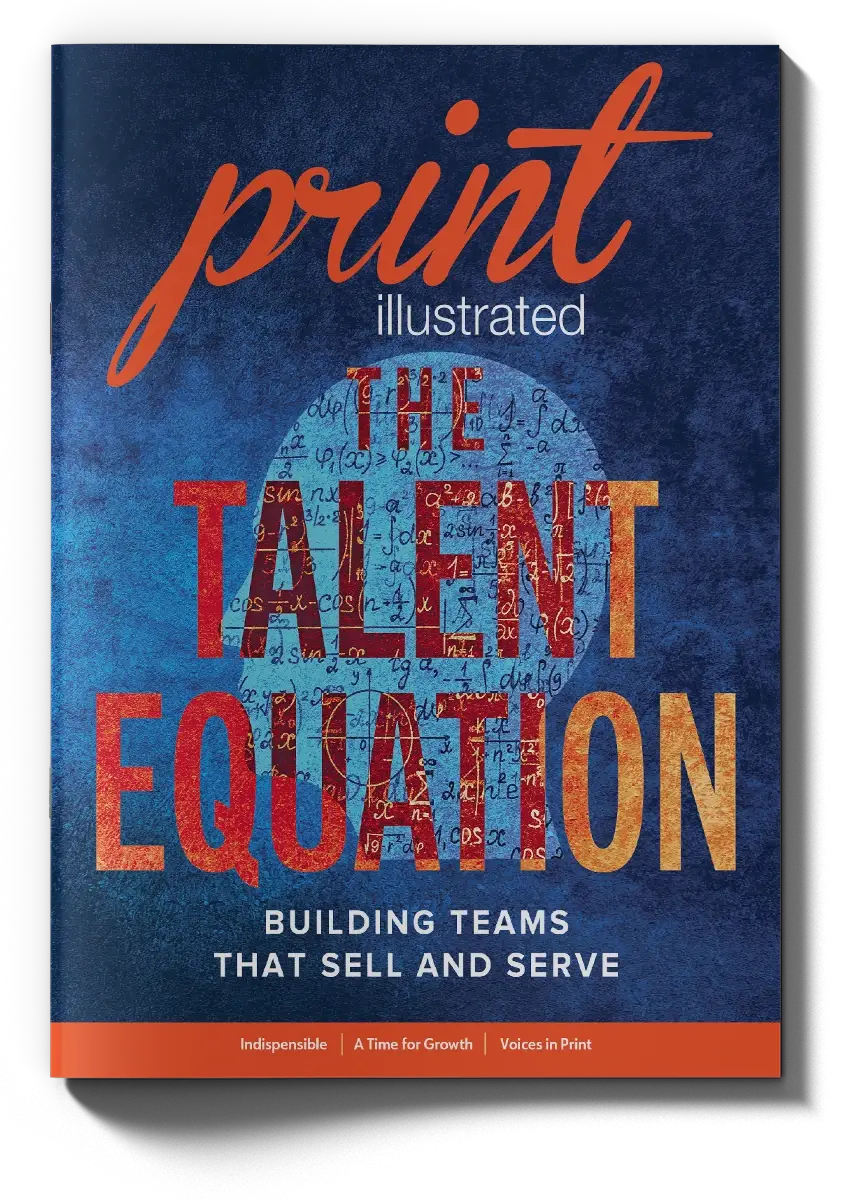

Few people in the print industry bring the combination of energy, curiosity, and market perspective that Andrew Gunn does. Recently named Head of FUJIFILM Print on Demand Solutions, Gunn has spent his career helping organizations embrace new technologies, rethink traditional approaches, and uncover new opportunities for growth. In this conversation, he shares his perspective on where commercial printers are finding success today, the challenges that continue to hold organizations back, and the investments he believes will separate tomorrow’s industry leaders from those struggling to keep pace. From automation and workforce development to AI, customer experience, and the future of print, Gunn offers a candid look at the opportunities ahead—and the mindset required to capitalize on them.
As you look across the industry today, where do you believe commercial printers are thriving, and where do you see the biggest gaps that still need to be addressed?
I am partial to anything that incorporates digital embellishments. But I see a lot of success within labels and packaging due to the constant growth of consumer products. Personalized, data-driven mail campaigns are on the rise and often outperform digital advertising for response rates. Short-run digital printing is important because customers want smaller quantities, faster turnaround, and customization. And book printing and print-on-demand is increasing.
One glaring gap is within the workforce. Many experienced press operators are retiring, and fewer younger workers are entering the industry. In addition, there is an automation adoption gap because some printers still have manual workflows that create inefficiencies and higher labor costs.
There are some other gaps like Web-to-print and e-commerce, data and workflow integration, and diversification beyond print that have plagued our industry as well. Customers want marketing help, fulfillment, mailing services, promotional products, and packaging ideas from a single provider.
“You need to be a little bit scared, but not in a bad way. I think leaders should be more curious with a touch of nervousness.”
What changes do you believe will have the greatest impact on the future of print, and what should printers be doing now to prepare?
Automation will be essential. Many printers still rely on manual estimating, job onboarding, scheduling, proofing, and customer service. I think the the most profitable printers will automate order intake and prepress workflows, utilize AI-assisted estimating and job routing, reduce touchpoints between order and production, and integrate MIS, web-to-print, CRM, and production systems. The gap between highly automated printers and traditional printers could widen significantly.
Labor may be a bigger challenge than technology. The industry is aging, and experienced operators, salespeople, and service technicians continue to retire. I would expect good printers will cross-train employees, simplify workflows, invest in automation that reduces dependence on specialized labor, and develops recruiting and apprenticeship programs.
AI will change sales and customer service. AI won’t replace printers, but it will help customers create marketing materials, campaigns, and artwork faster. In turn, customers will expect customized communications. So, there will be a demand for variable-data direct mail, localized marketing campaigns, one-to-one promotional materials, and customized packaging. And I believe that the
printers that combine data, creative services, and print production will have a major advantage.
Where do you believe the smartest investments are being made today, and where do you think companies should be investing more aggressively?
If I were advising a commercial printer today, my priorities would be focused on the following:
- Invest in workflow automation before buying another press.
- Develop a strong web-to-print and customer portal strategy.
- Build expertise in data, personalization, and marketing services.
- Diversify into packaging, labels, wide format, or fulfillment where appropriate.
- Create a workforce succession plan.
- Use AI to improve productivity across estimating, customer service, sales, and operations.
- Focus on profitability per employee, not just revenue growth.
The printers that thrive over the next five years will increasingly look like technology-enabled marketing and communications companies that happen to produce printed products, rather than traditional print shops focused primarily on running presses.
What separates the print organizations that are merely surviving from those that are truly building sustainable, high-growth businesses?
Always asking yourselves ‘what problem does this solve?’ If it is not solving anything, then why do it? The smartest investments today are generally not in presses themselves—they’re in the systems and capabilities that improve productivity, customer experience, and differentiation.
The smartest investments are being made in workflow automation and customer experience. The leading printers are tactically investing in automated prepress workflows, touchless job onboarding, online proofing, automated scheduling and job routing, and the integration between CRM, MIS, web-to-print, and production systems. These investments often deliver a better ROI.
Successful printers are paying great attention to customer-facing strategies. They are focused on providing online ordering portals, self-service reordering, job status visibility, faster quote turnaround time, and making digital asset management easy. Customers are now comparing their print buying experience to modern e-commerce experiences. So we, as an industry, must pivot to their needs.
What advice would you offer the next generation of print leaders who are trying to navigate uncertainty, inspire their teams, and position their organizations for long-term success?
You need to be a little bit scared, but not in a bad way. I think leaders should be more curious with a touch of nervousness. If we are a little scared, we tend to want to learn more to overcome it and put in the hard work of getting answers and spreading the word.
The one thing you cannot be is afraid of change. Every generation of leaders faces disruption, and in our industry that’s nothing new. The technologies, customer expectations, and business models may evolve, but the fundamental responsibility of leadership remains the same: creating clarity, building trust, and helping your organization move forward with confidence.
Equally important is to stay close to your customers. It’s too easy to become consumed by internal challenges, but the best opportunities often come from understanding what your customers are trying to accomplish and how their needs are changing. The organizations that listen carefully and adapt quickly are usually the ones that win.
Also, invest in people. Technology will continue to transform our industry, but talented, engaged employees remain the foundation of every successful company. Develop future leaders, create opportunities for growth, and build a culture where people feel empowered to contribute and innovate.
Finally, be willing to make difficult decisions and take calculated risks. Leadership isn’t about avoiding uncertainty; it’s about making informed decisions when the path isn’t perfectly clear. The companies that achieve lasting success are usually led by people who are willing to challenge conventional thinking, learn from setbacks, and keep moving forward.