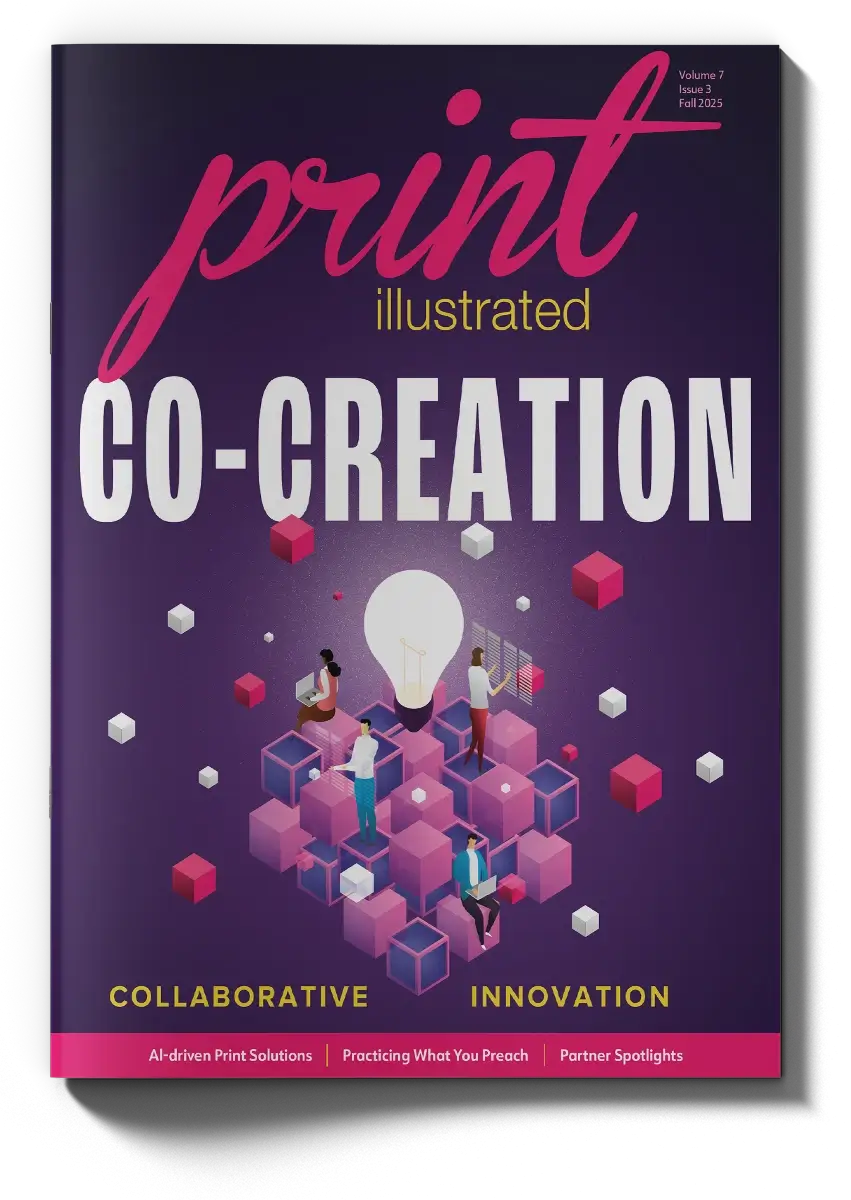
A client came to Tru Art Color Graphics with a challenge. The group needed to connect with audiences on a more personal level—but at scale. A standard print run wouldn’t cut it. The request, as Catherine Howell recalls, became the spark for a new way of thinking about collaboration. The initial discussions didn’t just center on paper weights or turnaround times. The conversation went to the heart of what the client wanted to achieve. Who they wanted to reach. What success would look like in six months, not just tomorrow.
Howell, Tru Art Color Graphics’ Director of Marketing & Communications, says answers didn’t just change the project; they helped transform the company’s service model. By combining strategic insight, creative problem-solving and advanced digital technology, the company co-developed a solution that blended smart automation, variable data personalization and advanced substrate compatibility.
The result was faster turnaround, sharper targeting and higher engagement for the client, as well as a new standard for how Tru Art Color Graphics would approach partnerships moving forward. “Partnering with technology providers has been essential to how we evolve our offerings,” Howell says. “We believe the most successful print solutions are born from collaboration. Our clients face rapidly shifting demands—from shorter turnaround times to personalized messaging at scale. By combining strategic insight, creative problem-solving and high-production digital technology, we work side by side with clients and technology partners to create solutions that are as unique as the brands they represent.”
As Howell emphasizes, collaboration isn’t just part of Tru Art’s process—it’s the driving force behind its innovation. The story isn’t unique. Across the industry, progressive printers are discovering that co-creation—working side by side with clients and technology firms to develop custom solutions—is no longer just a value-add. It’s the path to sustainable growth and competitive advantage.
“With most challenges, communication is the key to overcoming them. We constantly ask our clients: If you could dream up the perfect campaign, what would it look like?”
– Jeff Fraley, Owner, Southeast Mailing & Printing Services
At Tru Art Color Graphics collaboration begins with curiosity. Howell describes her team less as vendors and more as an extension of their clients’ marketing departments. “We ask a lot of questions up front. Our discovery sessions go far beyond print specifications. We dig into their objectives. Their customer engagement strategies. Their long-term vision. The more we learn, the more value we can bring.”
That deep dive often uncovers blind spots or even stereotypes about print. Clients may think of print as static, when in fact today’s technologies make it dynamic, measurable and highly personalized. By educating customers on the evolving possibilities, Tru Art Color Graphics helps them reimagine how print fits into an omni-channel strategy. “These innovations don’t just streamline production,” Howell explains. “They elevate creative integrity and keep our clients’ brand voice consistent across every touchpoint.”
Feedback—both from clients and tech partners—is treated as a gift. Formal debriefs and informal conversations spark new service ideas or highlight areas for process improvement. “We actively share real-world insights with our technology providers,” Howell says. “That feedback loop influences product enhancements and keeps us ahead of client needs.”
There is a flipside. Howell admits that collaboration isn’t without challenges. Aligning timelines and integrating new platforms with legacy systems require flexibility and open communication. Tru Art Color Graphics’ solution has been to build a culture that embraces change. “Our team is highly adaptable. That adaptability is what makes innovation sustainable.”

Having conversations that count
At Southeast Mail & Printing Services, the foundation of collaboration is conversation. The process starts with a discovery meeting, where Jeff Fraley and his team sit down with their clients to understand their goals, their audience and their challenges. Is their current campaign keeping pace with trends and demographics? What’s working? What isn’t? The answers to these questions help shape everything.
“Listening is probably the most important thing we can do when working with clients,” says Fraley, owner of the Lexington, Kentucky, printing and shipping service. “Not every client is created equal. What works for one may not work for another. You have to understand what and why they do what they do. That’s critical in collaboration. Reviewing past campaigns or projects and understanding the level of success or satisfactions that normally give us our guardrails to design the next project.”
The next tool in the toolbox is building technology partnerships. By working with equipment providers, Southeast Mail is able to test and demo new tools before they hit the market. Getting early access helps expand capabilities, increase speed and open the door for more sophisticated variable messaging.
“The amount of data available today is astounding, but not every client understands how to use it effectively,” Fraley says. “The key is showing them how high-level personalization can drive emotion—and action. If a recipient feels like the message was made for them, they’re far more likely to engage.”
“We believe the most successful print solutions are born from collaboration. Our clients face rapidly shifting demands—from shorter turnaround times to personalized messaging at scale.”
– Catherine Howell, Director of Marketing & Communications, Tru Art Color Graphics
Tracking and measuring campaign effectiveness is another area. For example, nonprofit clients may bring in new donors from an acquisition mailing, but lose sight of how those relationships evolve over time. The Southeast Mail team works closely with clients to connect the dots and ensure long-term ROI is recognized. “With most challenges, communication is the key to overcoming them,” Fraley says. “We constantly ask our clients: If you could dream up the perfect campaign, what would it look like? Their answers drive our direction and even influence how we invest in new technology.”
If there is a theme that runs through the foundation of success, it is partnerships. Simply building a better mousetrap isn’t enough. “The successful companies of tomorrow will have engaging partnerships with both clients and technology firms,” Fraley says. “Those relationships will become the roadmap for where we need to invest and how we need to grow.”
In a landscape where the most transformative ideas rarely come from one side alone, today’s printers understand that there is power in combining forces and vision. The art of co-creation is not just a strategy today, but a way of doing business.
5 steps to co-creation
- Start with Discovery – Go beyond print specs. Ask clients about goals, audiences and long-term vision.
- Listen First – Treat listening as your most powerful tool. Understand not just what clients need, but why they do what they do.
- Educate & Inspire – Challenge outdated assumptions about print. Show how new technologies make it dynamic, measurable and personalized.
- Build Feedback Loops – Collect input from clients and technology partners. Use it to refine processes, spark new services and guide investments.
- Embrace Change Together – Stay adaptable. Integrating new tools and workflows is smoother when collaboration is baked into your culture.
Source: Jeff Fraley, Owner, Southeast Mailing & Printing Services; Catherine Howell, Director of Marketing & Communications, Tru Art Color Graphics